 From Die with Zero to Die with Purpose
GPC Taiwan|The Taiwan Generosity Culture Movement
We are very good at measuring things.
We measure income, assets, investment returns and opportunity costs. We measure GDP and GDP per capita.
In the age of AI, we may become even better at calculating. That is not necessarily a bad thing. For younger generations especially, housing costs, careers, family responsibilities and uncertainty about the future make opportunity cost very real.
I have long appreciated the idea behind Die with Zero:
Don’t spend your whole life accumulating. Use your resources while you still have the time, health and ability to create a life worth remembering.
Bill Perkins calls this a Memory Dividend.
A journey taken when we are young, an adventure, or time spent with someone we love doesn’t pay us only once. Every time we remember it, the experience can pay another dividend.
Over the past few years, however, I have found myself asking another question:
What if there is also a Ripple Dividend?
Some things don’t disappear when they leave our hands.
Money. An opportunity. An introduction. Our time. A room. Trust. Even the simple words:
“Please use me.”
They enter someone else’s life. And sometimes, through that person, they travel again.
We may never know where the ripple ends.
Perhaps that is part of its beauty.
From Memory Dividend to Ripple Dividend
Die with Zero asks:
Did I use my resources to live fully?
I would like to add another question:
When I leave, beyond my memories, what will I leave behind?
These ideas don’t compete.
We don’t have to live less in order to give more.
And generosity doesn’t need to mean sacrifice.
Making another person happy can make us happy. Making the world a little better can make our own lives more meaningful.
Perhaps these aren’t opposing interests at all.
That is why my thinking has gradually moved from Die with Zero toward Die with Purpose.
Not as a rejection of the first idea.
Just one more question:
Beyond living fully, what did I put back into the world?
When accumulation becomes an excuse to postpone giving
I see Taiwan caught up in an intense fascination with the stock market.
Investing is not wrong. Compounding is useful. Financial security gives us freedom.
But there is a danger hidden inside the phrase:
“I will give after I have accumulated enough.”
“Enough” has a habit of moving farther away. A higher return creates a higher target. A larger portfolio creates a stronger fear of losing it. Giving is postponed until some future stage of life that may never arrive.
We calculate investment returns, but rarely calculate what generosity returns to a life.
A gift made today can create meaning now. It can create trust, opportunity, human connection and a Ripple Dividend that may continue through other people.
Wealth accumulation should increase our freedom. But when accumulation becomes the purpose itself, it can quietly reduce freedom and postpone happiness.
Generosity is not the enemy of investing. It gives investing a larger purpose.
We do not need to stop building wealth.
We need to stop postponing generosity.
This is the bridge from Die with Zero to Die with Purpose.
What if, alongside GDP, we talked about Generosity Per Capita?
We use GDP to measure how much economic value a society produces, and GDP per capita to look at economic output per person.
But is the richness of a society captured only by how much it produces, earns and consumes?
I began wondering:
Could we also talk about Generosity Per Capita—GPC?
By GPC, I do not mean Giving Per Capita.
It isn’t simply a country’s annual charitable donations divided by its population. Nor is the purpose to create another international ranking of who gives the most.
The question that interests me is larger:
How generous is our society, person by person?
Are people willing to share money, time, knowledge, connections, spaces and opportunities?
Are those with something useful to offer willing to say:
“Please use me”?
Are we willing to put some of what we have back into circulation?
GPC, then, isn’t only about donations.
It is an attempt to understand a society’s culture of generosity.
A first, rough monetary formula could be:
Monetary GPC = Total documented private charitable giving during the year ÷ Total resident population
The numerator could initially include donations actually made by individuals and businesses to legally registered NPOs, NGOs, foundations, public-benefit organizations and religious organizations.
Government grants should be excluded, and transfers between nonprofit organizations should not be counted twice.
Like GDP per capita, this formula invites us to ask: beyond the economic value produced per person, how much do we put back into society per person?
This is only a first monetary approximation. Generosity also includes time, knowledge, relationships, volunteering, spaces, trust and saying “Please use me.” These dimensions deserve further research.
But we can begin with a measurable question:
Alongside wanting a higher GDP, would we also like to live in a society with a higher GPC?
GPC is not a goodness score
This matters enormously to me.
If GPC ever becomes a leaderboard of who is more generous, I think we will have lost the point.
I don’t want generosity to become another form of status.
And I certainly don’t want it to become another source of moral pressure.
So I would like to put down one principle at the very beginning:
Your GPC is not a score of how good you are.
It is a question about how intentionally you live.
At the societal level, I would put it this way:
GPC isn’t a score of how good we are.
It invites us to ask what kind of society we choose to become—and how each of us chooses to live within it.
Not because we should.
Because we choose to.
From social culture to personal practice
If GPC is about the generosity culture of a society, what about the individual?
Here I would like to keep things very simple.
At least initially, let’s measure money.
Time, knowledge, introductions, presence and saying “Please use me” are all forms of generosity. Sometimes they may be worth far more than money.
But once we try to assign a monetary value to every hour, introduction and act of generosity, the idea quickly becomes complicated.
So:
Not everything generous can be measured.
But measuring one simple thing can remind us to give more intentionally.
That leads to two personal measures that are easy to understand.
Generosity Ratio (GR): How much of what became freely available did I actually give?
The formula is:
GR = Actual annual giving ÷ Annual discretionary cash flow × 100%
“Actual annual giving” means money or assets already given or irrevocably transferred for public benefit. An intention, an unpaid pledge or a future budget does not yet count.
“Annual discretionary cash flow” means the cash that remains freely available after taxes and essential personal and family obligations. Someone with a simple financial life may use a consistent after-tax income measure as a practical approximation.
Here is a purely hypothetical example:
If someone has NT$300,000 of discretionary cash flow during the year and actually gives NT$15,000:
GR = 5%
The exact percentage is not the point. Consistency and intention are.
There is no morally correct GR. One percent, three percent, five percent or another number does not make someone a better person. Nor should GR become a public competition.
It asks a private but useful question:
Did generosity have an intentional place in the design of my life this year—or did I postpone it again?
GR measures an individual’s annual practice. A young person with few accumulated assets can begin immediately. The formula turns “someday” into “this year.”
Ripple Ratio (RR): How much of what I have accumulated have I committed to the future?
As we move through life, the question gradually changes.
We accumulate cash, investments, property, business ownership and other assets.
Eventually I find myself asking:
Of everything I have accumulated, how much is ultimately meant only for me—and how much have I intentionally committed to something larger than myself?
So:
RR = Assets formally committed to future public purpose through a will, notarized declaration, trust, transfer to a foundation or another documented arrangement ÷ Total personal assets × 100%
RR isn’t about how much I donated this year.
It asks how much of the wealth accumulated during my lifetime has been formally directed toward creating public-purpose ripples in the future.
For transparency, I distinguish between two layers:
Commitment RR includes assets designated through wills, notarized documents, trusts and other formally documented commitments to future public purpose.
Irrevocable RR includes only assets already legally transferred beyond personal recall or redirection.
This lets us recognize long-term intention while remaining honest about how much has already been put irreversibly into action.
It is a question of legacy.
The whole framework now becomes quite simple:
GPC looks at the generosity culture of a society.
GR looks at an individual’s annual practice.
RR looks at an individual’s long-term legacy.
Or:
GPC is the culture.
GR is the practice.
RR is the legacy.
We can begin at every stage of life
One thing I particularly like about this framework is that it doesn’t belong only to wealthy people.
At 25, perhaps you have almost no accumulated assets.
That’s fine.
You can begin with your Generosity Ratio.
At 45, income may have grown, but so may family responsibilities. You can ask whether generosity has become a regular part of your annual life.
By 65 or 75, after accumulating some assets, the Ripple Ratio may become a more meaningful question:
Where do I ultimately want these resources to go?
Everyone’s answer can be different.
The answer should also be allowed to change at different stages of life.
GPC Taiwan: a generosity culture movement
A movement does not begin when everyone agrees on a perfect formula. It begins when enough people start asking a different question.
GPC: What kind of generosity culture are we creating together?
GR: What portion of what became freely available to me did I actually give this year?
RR: What portion of what I accumulated have I formally committed to serving the future?
We do not need to publish our answers or compare percentages. We can begin privately, speak honestly with trusted friends and choose one concrete act.
The movement is not “give away everything.” It is:
Stop treating generosity as something to do only after wealth accumulation is complete.
We can invest and give. We can enjoy life and create ripples. We can pursue financial freedom while also creating meaning.
The Archangel Program: Die with Purpose in action
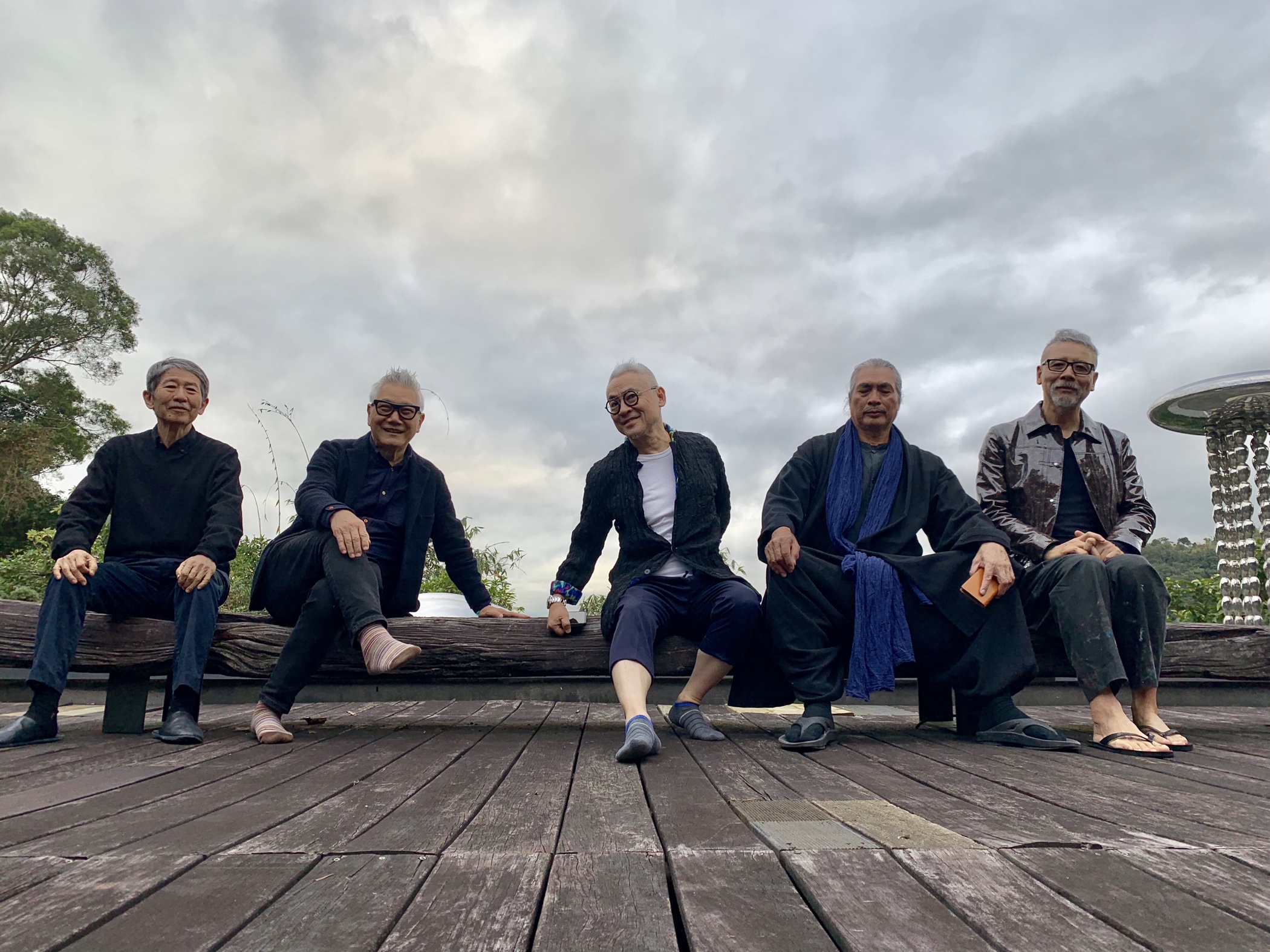
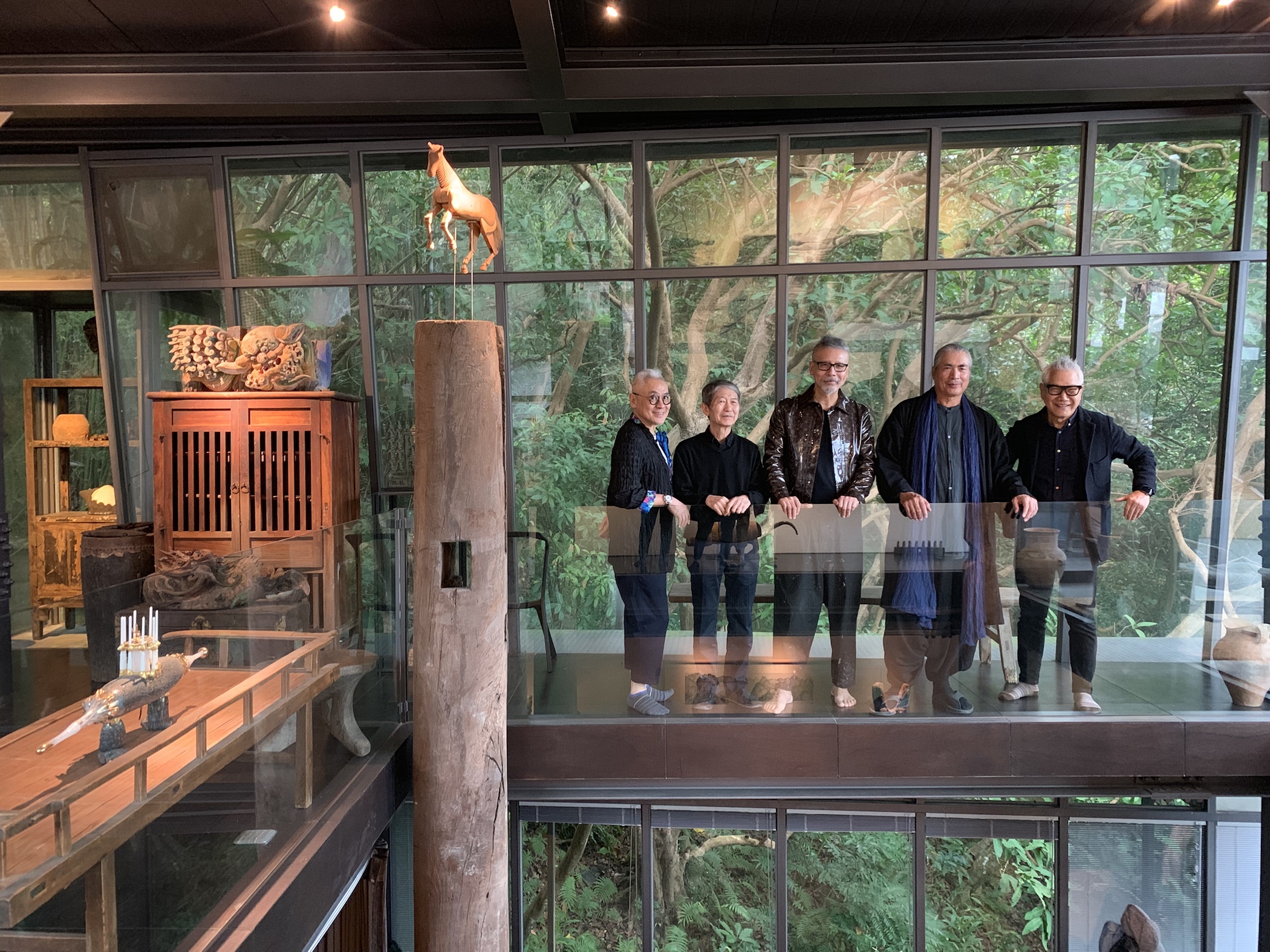
The Archangel Program is one practical way a group of us is already putting Die with Purpose into action.
Through stable, long-term commitments, Archangels support trusted organizations so they can employ good people, sustain essential operations and concentrate more fully on their missions.
These Archangels demonstrate that generosity does not need to wait until the end of life—or until wealth accumulation is complete.
Thank you to every Archangel.
You are more than donors. You are showing your children and grandchildren that wealth is not merely something to accumulate or inherit—it can be transformed into purpose. You are teaching them that generosity is not sacrifice, but a sustainable way of living worth carrying forward from one generation to the next.
We should not leave our descendants only wealth.
We should also show them what wealth is for.
If this idea speaks to you, begin privately: calculate your GR and RR, choose one act appropriate to your circumstances, and invite another friend when that person is ready.
That is how a formula becomes a practice—and how a practice may gradually become a culture.
We are part of something larger than ourselves
I am 77 years old.
At this age, I see more clearly that the most interesting question at the end of life may not be “How much do I still own?” but:
How much can I still set in motion?
I don’t want to tell younger people how they should spend their money.
Nor do I want to tell anyone how much they should give.
I simply want to offer an invitation.
The next time we calculate investment returns, opportunity costs or asset allocation, perhaps we can also ask:
What is our GPC?
What is my Generosity Ratio?
What is my Ripple Ratio?
The answers do not need to be shared.
And they certainly do not need to be compared with anyone else’s.
If, one day, more and more people in Taiwan begin asking these questions, perhaps we will gradually develop another way to think about abundance.
Not only:
How much did I earn?
How much did I accumulate?
How much did I experience?
But also:
How much did I give?
How much did I put back into circulation?
And how far might what I leave behind travel?
That is why my thinking has moved from Die with Zero toward Die with Purpose.
Not to live less.
But to make giving part of the experience of being alive.
Live fully. Give intentionally. Die with purpose.
Live well. Give consciously. Leave with purpose.
We are all part of something larger than ourselves.
And every ripple can begin with one person.
Still waters run deep; good deeds travel far.
 從 Die with Zero 到 Die with Purpose
 重新開始,寫給準備好的人